If you have come to Missionaries, Mercenaries and Misfits looking for one of my older blogs (Washerman’s Dog, Harmonium Music, C90 Lounge etc.) welcome!
Those blogs are now ‘dead’ in the sense that I will no longer post there. I will be posting what I used to post on those blogs, here from now on. That means you will find music (all regions, all styles, including South Asia)and more here.
Thanks for stopping by and I hope you like what you find here. I’m still populating this site so keep checking in. There should be stuff posted almost every day.
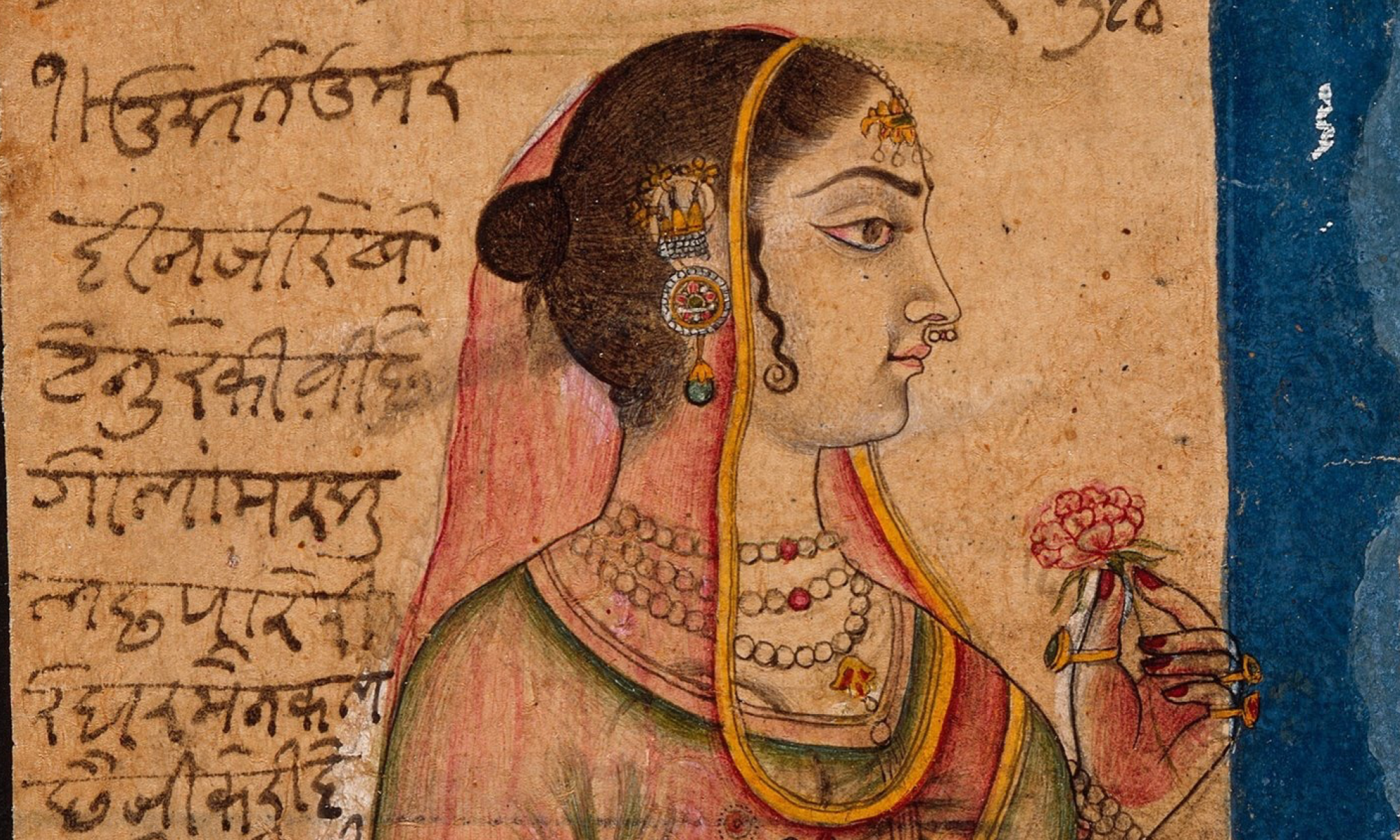
I saw the same story of Rama, in each universe, in innumerable worlds [Ramacharitamanas of Tulsidas ]
I just took a thirty-seven-hour train trip straight down the center of India. Like a surgeon’s scalpel, the train sliced open the skin of the land to reveal worlds usually unseen and taken for granted, but hiding in plain sight.
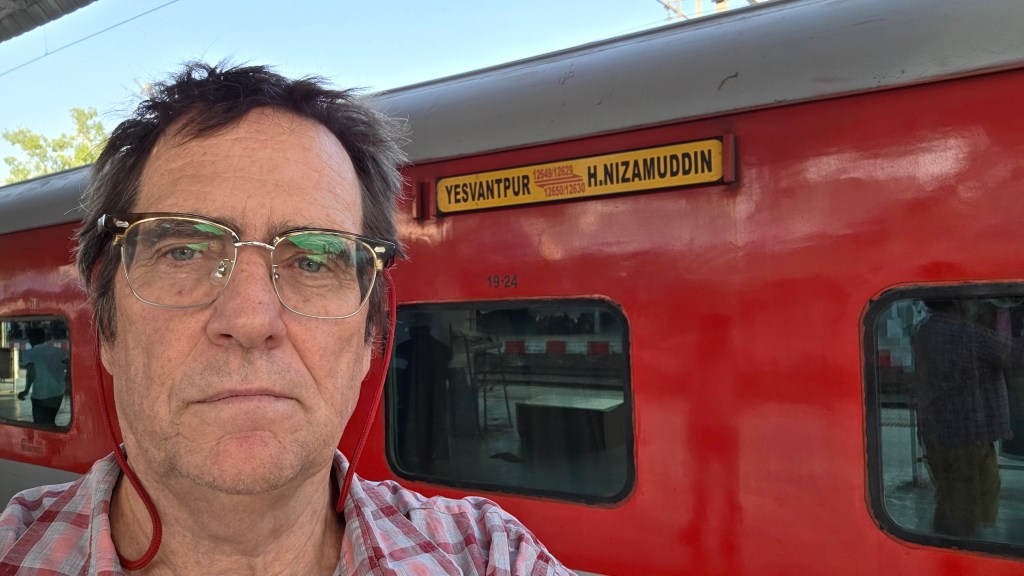
It was a long-distance train with an equally long-winded name–12630 Hazrat Nizamuddin – Yesvantpur Karnataka Sampark Kranti Super Fast Express. As she sped along, we travelled through time traversing ground whose extrusion 66 million years ago helped bring the age of the dinosaurs to its end. We were carried through the myths of Lord Krishna playing on the banks of the Yamuna in Mathura; the Taj Mahal watched us from a distance. The number of dynasties that ruled these thorny, dry hills boggles the mind. I lost count at ten but love saying their names to harmonize the clickety clack of the train’s wheels. Shunga, Kanva, Naga and Shilahara. Bundela, Maratha, Scindia and Patwardhan.
The trip touched not only the mythical origins of Hinduism but the peaks of Indian Buddhism and glories of medieval Islam. We swayed our way by supreme icons of Indian art such as the seven storied stone palace at Datia, built as a guesthouse by Bundela king Maharaj Bir Singh Deo for the World Conquering Jahangir who never set foot inside. And the seven-meter-tall pillar of quartz sandstone gifted to Shunga king, Bhagabhadra, by Heliodorus the Greek ambassador of Taxila, to commemorate his conversion to Vishnu worship. The sublime Great Stupa of Sanchi commissioned by Ashoka for his wife, the first Buddhist power couple of South Asia, just a short distance from the tracks near Vidisha.
On and on I could go.
We crossed two of India’s sacred rivers, the Yamuna within the first few minutes of the trip and the Krishna just before entering northern Karnataka 30 hours later. We climbed up and down several mountain ranges: the Satpuras, the Sahyadris and the Dharwad Crags. And of course, the range that divides the north from the south–the Vindhyas–about which I’ll tell you an old story.
Once upon a time Vindhya, the king of mountains, felt slighted that Suryadev (the sun) circumambulated Mt. Meru, the original mountain of creation, but ignored him. He demanded that Suryadev include him in his orbit. But Suryadev explained that his route was not his call but the command of Lord Shiva. Sorry, dude.
Vindhya flew into a rage. To show his power he and his fellow mountains began growing higher and higher, and promised to block out the sun . The gods panicked. They begged the sage Agastya, who Vindhya respected as a guru, to have a talk with Vindhya. “Convince him to stop growing, dear Sage. You are our only hope.”
Agastya felt compassion for the gods and began his journey southward. As he approached, Vindhya called out a welcome to his guru and asked where he was going. Agastya replied that he was on his way to the southern part of Bharatvarsha (India) and requested his friend to let him pass. “And while I am away, I would like you to bow your heads until I return this way, at which time you can again stand straight and tall.”
Vindhya and his followers unquestioningly bowed their lofty heads and swore to remain thus until such time as the Sage returned North. In the South the sage did many wonderful things and was so feted he never returned North. And so, until today, Vindhya and his clan of mountains remain bent low, as they promised, allowing the Himalayas to reign supreme as the Land of the Gods.
All this lore and history in 37 hours; in a single train journey covering 2100 kilometers. Hundreds of books could be written about the stories that echoed against the glass and steel of the train as it tracked that single course through central and western India.
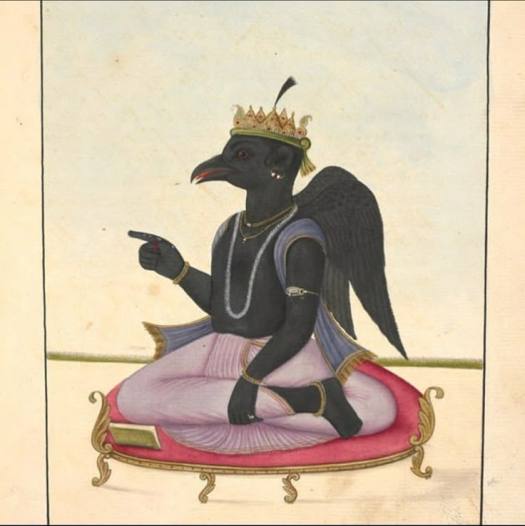
Sage Kakbhusundi
There is another story, a favorite, about the sage Kakbhusundi, the immortal crow-man who is playfully swallowed by the infant Rama. Inside the god’s young belly Kakbhusundi is entertained by a phantasmagoric, psychedelic, wild and crazy show of multiple worlds, multiple timelines, multiple universes all unfolding simultaneously in the past, present and future. When the crow sage is burped back out of the child’s belly, he discovers that in fact, no time has passed whatsoever. On this particular journey, in the late spring of 2026, that strange and wonderful creature took the form of an elderly Bihari man travelling to his son’s home in Pune and became my travelling companion.
I normally am a ‘stick to myself’ traveler. I’ll be polite and converse, but rarely will I introduce myself or initiate a conversation. But as soon as I entered the cubicle, I found myself saying, ‘Namaste. My name is Rabe. I am travelling to Hubli.’
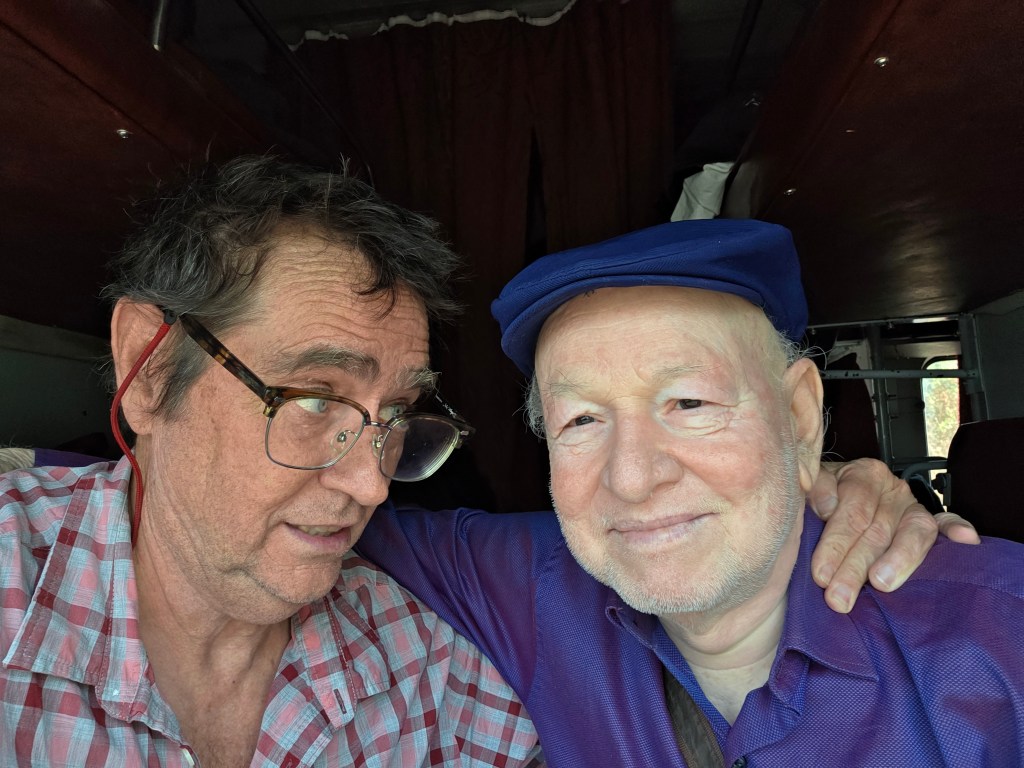
I am Pradeep Kumar Yadav.
The speaker wore a dark blue flat cap, a new, still-creased purplish-blue shirt that changed color depending on the light and, track pants. He reminded me instantly of my mom’s oldest brother, Uncle Omer, a kindly, gentle-countenanced school cook from Minneapolis. Shri Yadav had my uncle’s cherubic face, his quick warm smile and balding pate (which I noticed a bit later, was peeling from being outdoors too long without his cap). He was quiet. His black corvid eyes sized me up while I exchanged the usual traveler’s chitchat with his daughter and grandson who had come to see him off. Before too long they asked his blessings, wished him safe journey and took their leave.
Yadavji opened the proceedings.
What job do you do in Australia?
I told him, but not fully trusting my Hindi asked if he was familiar with what I had described.
Oh, of course, I know NGOs. They do good things for people. Bahut accha. Retired? I see. Ok. Ok. I understand.
When he spoke I could see he loved his paan(betel nut). He was missing several of his upper teeth; the rest were stained a dark reddish brown especially in the fault lines where they met. I marveled at his coloring. He was not an albino but every part of his skin including his toes and feet were closer in hue to mine than those of any other passengers. I asked him what he had done for work.
I was a junior engineer in the railways. Actually, a little above junior engineer. Mostly worked in the big Jamalpur workshop, on the loop line between Patna and Calcutta. No no no. I was not a driver. I was mechanical. Working inside the shop itself. My original place is Munger. Next to Bhagalpur. In the 1960s some Baba set up a big yoga school and now people come from all over, mostly Ingland and America, to study yoga. You know when I was young, between 1962-65, we used to see lots of American young people in India. We used to call them hippies! ‘Look at that hippie. This hippie is doing that.’ That is what we called them. Hippies.
He broke into little chuckles as he spoke. His eyes twinkled at certain points for emphasis. As is commonplace in India his hands and fingers moved as well, unconsciously adding visual punctuation.
Bihar is very ancient, isn’t it?
Very ancient. Yes. Very much . All the great philosophers, Buddha (well, he came from Nepal actually but he became enlightened in Bihar), Mahavira the saint of Jainism. Adi Shankaracharya, you know his name? Yes? Good. He travelled all over India, going from one corner to the other. But he found the greatest fame in Bihar. He was the one who emphasized Jnana. Knowledge. But you know, today, even though the teaching of these philosophers has spread across India and the world, in Bihar itself everyone has turned it all upside down. No one considers the teachers’ main message which was ahimsa. Non-violence. Instead, today people practice only himsa. Life is all about violence, power, corruption only.
He was clearly a man well-read for this station in life. He talked about Israel and Iran, Max Mueller, and theorised about the benefits of ‘evil’ being a step toward human development. He asked me what my favorite place in the world was, seeing as ‘you’ve been everywhere.’ Before I could finish my usual too-long answer, he was talking again.
Our Vedas and purans you know are full of amazing things. They have written that the gods would use bows with arrows that shot fire! And even that they could shoot the other arrows out of the sky. And if the arrows collided in the air they would join together and shoot straight up into the heavens. Zhoom! Rockets! Even, some scientist discovered, that in Mohenjo-Daro the people could write something on one tablet here, and on the same sort of tablet hundreds of kilometers away, the same exact thing would be written.
I push back at this. ‘How does anyone know that? No one has deciphered the script and how can you say any two slabs of stone were written at the same time.” I suspect he might be what they call these days a bhakt. A Hindu chauvinist who believes that nearly everything we experience in the contemporary world from plastic surgery and the internet to air travel existed in Vedic times (1500 BCE). But I see that I’ve missed the point he is making.
Of course, you are correct. But you see scientists discovered that in some of those stones in that area there was some sort of magnetism that allows this process to happen. Here, one thing. There, the same!
He quickly shot his arms in different directions to help me understand what he was saying. Here. There.
I want to mention quantum entanglement theory; the one Einstein called ‘spooky action at a distance’ but knew I would never figure out how to do so in Hindi, so let him continue. But he’s in no hurry. He falls into silence. I look out the window. He tells me we are coming up to Mathura, the land of Krishna. I watch the station of the modern city whiz by. Our train doesn’t stop. Neither does it at Agra, a further half hour down the track. This is the agricultural heartland of UP he says, before nodding off. When the train lurches he wakes up and continues the thought.
One time during the British days, Germans came to India to study our philosophy. They studied it deeply and took back 500 Sanskrit scholars to Germany and set up a SanskritUniversity! Yes! In Germany itself. People from every country, even from India, go there to study. Can you imagine!
That Indian scholars would travel to Europe to gain knowledge of their own culture seemed to simultaneously tickle and disappoint him.
These Germans began to look for the science in our scriptures. The Vedas are actually about science, they concluded. But our Indian pandits say the Vedas are only religious books. They are content with that much only. They are happy to say, “you see, we are the world’s best religion because we invented all these modern technologies before anyone else.” But the Germans wanted to understand and discover how they could use the Vedas and purans to benefit mankind. So, they did deep research to discover and explain the Vedas in scientific terms. As a result they invented so many things like rockets and missiles. And today we have the modern world. You see Europeans, especially the French and the Germans, not so much the English, were clever. They didn’t just say, ‘we thought of these things first.’ They wanted to test to see if Vedic science could be made to work. That is why Europe and the West are so much more productive than India. We Indians are content to simply know. And make statements about things. But take action. Look at those fields. The soil here is so rich but the productivity is so low. Go into any village and you’ll come across a group of men here, and one over there, and more over there someplace else, playing cards. That’s what they do. Play cards and gamble all day. When others could make the land so much more productive for the benefit of everyone. That is why Europe and Japan are so far ahead of us. They work and use their minds to help others, not just to chant slogans. Which is all these pandits and holy babas our government likes to promote, do. This is our predicament.
While he’s talking a part of me sees glimpses of other people I love in his face. Mike, my oldest brother. Yadavji shares his birth year (1947), and he has the same inquisitiveness about the world as my brother did. I hear Phil, a school mate, in the way Yadavji speaks Hindi; especially the way he becomes more confident towards the end of a story or a thought. His cadence quickens and his mannerisms, slightly challenging, like a fired-up cock, match the way Phil spoke Hindi back in the day.
Stanley, a dear friend for many years, also seems to be winking at me from within Yadavji. They shared a love for Bihar and told the same kind of jokes. Simple ones. Not especially clever ones but ones you could not help laughing out loud to because the punchlines pointed to the foibles of being human in a crazy world. Like this one:
Modi wanted to get a bullet train for India so went to Japan. He had a ride and was very impressed. On return home he invited the Japanese PM to come and visit India. Having been so impressed by the bullet train and Japan in general, Modi wanted to show his counterpart the best of India. So he took him to Varanasi. They spent hours floating around the river, up and down, in front of the bathing ghats and temples. 100s of priests and pandas chanted mantras and did aarti with incense and small diyas. There was loud religious chanting and resounding drums. After four hours, the officials got off their boats and climbed to the top of one ghat for the official ceremony. The Japanese PM leaned over to Modi and said, “I don’t know why you’re so interested in a bullet train when you’ve got so much time to kill!”
We both burst out laughing at this absurdity. And then we laughed a bit longer because we were both laughing and enjoying the moment. This was exactly how Stanley would get me to tears of joy and draw me in. As Yadavji and I looked into each other’s eyes, I felt the uncanny presence of my deceased friend, chortling and smiling back at me.
As to his halting Hindi this is what he had to say.
In Munger we speak Angki. The area is old and in those days that area was known as the kingdom of Ang. No, no. It is Hindi. My language is Hindi but my boli, my tongue, is Angki.
I knew about Maithili and Magadhi. I even could understand a bit of Bhojpuri, all dialects and boli from Bihar and Eastern UP. But I’d never heard of Angki.
Yadavji was from the Hindi belt but messed up his genders, cases and tenses. Like me and Phil. This was another little bond that connected us for the time we were together. We didn’t care about the delivery but the content of what we were saying. And yet when his family called, his words flowed smoothly without any hesitation. I could understand a word here and there, but not many. It was a completely different language than what I knew as Hindi.
I later discovered that Angki is one of the oldest living languages in India, stretching back to the 5th and 6th centuries before Christ. Indeed, as Aramaic was to Jesus of Galilee, Angki was to Gautam Budh. Kakbhusundi it seemed, had avtared as Yadavji, from a lost world speaking a language that Buddha would have preached in. And morphing from one familiar face to another in some sort of play.
Yes, indeed, Bihar is an ancient land.
We rolled into Pune about an hour late. There was a lot of slow going as maintenance crews bolstered the tracks against the dynamic earth that shifted frequently and radically just a few meters below the surface. He plugged in his earphones and returned to watching something on his phone. He laughed to himself. I watched the big city grow around us. But I couldn’t stop thinking of the crow-man in the belly of Rama. And how within a single soul, the soul of one man, a myriad of worlds, histories, and incarnations exist, not in conflict but in some weird harmony.
By the time I helped him on to the platform at Pune we had sailed together through several worlds. From geologic epochs up to the present day. Dozens of kingdoms and rajas had risen and fallen over the hours. Timeless ragas and sermons had been composed and preached and yet this all had unfolded in a single train compartment.
Yadavji, like Kakbushundi, the man who became a crow who worshipped Vishnu who in turn became Rama and later Krishna, and Hanuman who could leap across time and space with ease, was a man who contained avatars of my family, my friends and myself. Displaced outsiders living in just one of the many possible multitudes of universes laughing and discussing and sitting as two friendly ghosts, translucent to all who observed us.
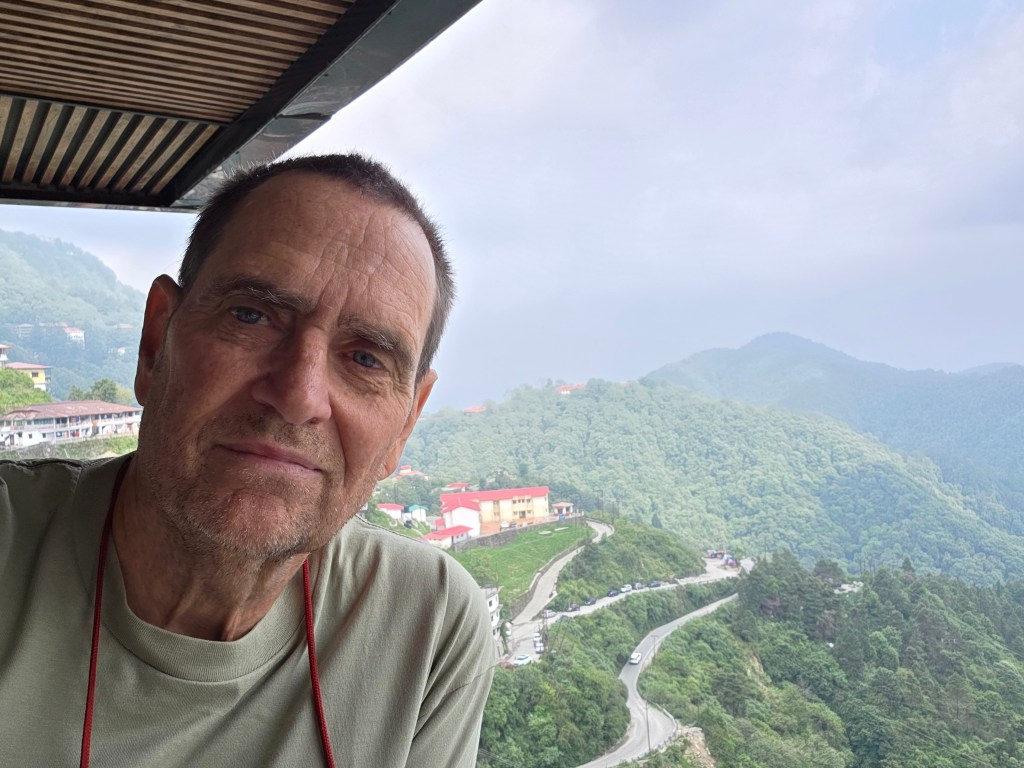
This is yours truly dropping in from Landour, a pretty hill station 7000 feet up in the Western Himalayas in north India. This is where I attended boarding school between 1964 and 1975 and where I have been for the last ten days or so.
I thought I’d let you know of a pretty significant change in direction for me personally and sneak in a request at the the same time.
After years of huffing and puffing about being a writer I have taken the leap. I came to India for 6 weeks to revisit some of the places I spent my youth and now that those six weeks are coming to a end, I have decided to stay on. Indefinitely. I can make my meagre income go much further here than in Melbourne and as I’ve always known, this is the country that is most tangled up in my mind, heart and soul. Over the past 18 months I’ve seen my ‘settled life’ as an aid worker, father, husband and ‘known entity’ change dramatically. The speed and extent of that change has only quickened and probed into depths I had not expected over the last month. Writing has been my preferred way of making sense of this world and so it makes sense to launch my new life here, while I’m here.
I will keep this site open but due to my reduced financial circumstances will be unable to maintain most of the music links associated with this and other blogs like C90 Lounge much longer. So if you are interested in downloading any of them I think you may have about 48 hours max. Good luck.
I am writing a lot but not really posting much anywhere as I’m not sure how to proceed. There is Substack, Medium, and lots of specialised writing communities out there. I know a few writers do drop by here from time to time. I’d love to hear from you (ajnabi1957@gmail.com) if you have any preference for any particular platform or site or how you approach sharing your work.
I think what feels right for me at this point is finding/creating a small community (as small as one other person even) who would be interested in sharing, reading and critiquing each other’s work. A sort of minor league of mutual criticism. It would require a commitment of some time and thought and effort on both (or all three or four) of our parts but may be quite rewarding as we support each other in getting better at connecting thoughts with words. If you’re keen or you know someone who might be or of a small group looking for another participant, I would really be grateful if you reach out. [ajnabi1957@gmail.com]
I am more a non-fiction/memoir/narrative fiction/historical fiction sort of guy but have written a couple of novels so am open to either genre.
As always thank you for your support and encouragement across the blogs and years. As a small gift here is a piece I’ve written recently, post arrival in India. No critique necessary to enjoy it!
Twelve months ago I separated myself from my family. In that time I have had my 35 year career as an international aid worker come to an emphatic close. I have been and continue bed-surfing and residence hopping as one does when you leaves a marriage suddenly. My 18 year old daughter does not talk to me. Thankfully, my 22 year old son, does (though he did keep to himself for several months). I have found that the age pension with a bit of taxi hacking meets my daily needs quite adequately. I have returned to driving cab for a second time, after spending a year between MA and potential PhD, driving the icy roads of Minneapolis for Blue & White taxis. I have had my license suspended for running too many red-lights and am on enforced leave until July 8. That is fine by me, because in early March, while still tending a broken heart over so much loss and change, I nearly killed myself, two lovely young women passengers and the driver of the car that smashed into my taxi as I did a careless U-turn.
The most significant change I have made over this time, is to embrace the fateful decision to no longer be (just) a weekend blogger, novelist and retro-fitted writer. Rather I am placing that long-echoing call at the centre of my retired life. Beginning a new adventure is what some people call this. I’ve heard it called Fool’s Errand, too.
And in a little less than three weeks I will be heading back to India, the land of my birth and first 18 years on a sort of ritual pilgrimage. I am going so I can feel the wind blow through the ‘cobwebs of my mind’, feel the heat burn the detritus of the professional salary man, and let the sounds, smells and sights of that fabled land wash over me wave upon wave.
Why do I tell you these things?
Though I’ve not met you in the analog sense, some of you have been fellow travelers and kindred spirits. And you have always wished me well. I have not been entirely dedicated to my blogging in the period under review and it is always good to explain oneself. Given where I’ve paused to catch my breath at this point in time and space I am inclined to direct my creative energies towards a memoir. As a way to make sense of some of old, chipped and stained pillars that have held up my world for as long as I can recall: India & my missionary-kid childhood.
I am daunted, excited, confused, compelled and called by, about and to this. I’ve not been to India since 2012 and not been to the places on my itinerary for between 62 and 19 years. So I’m looking forward to whatever awaits.
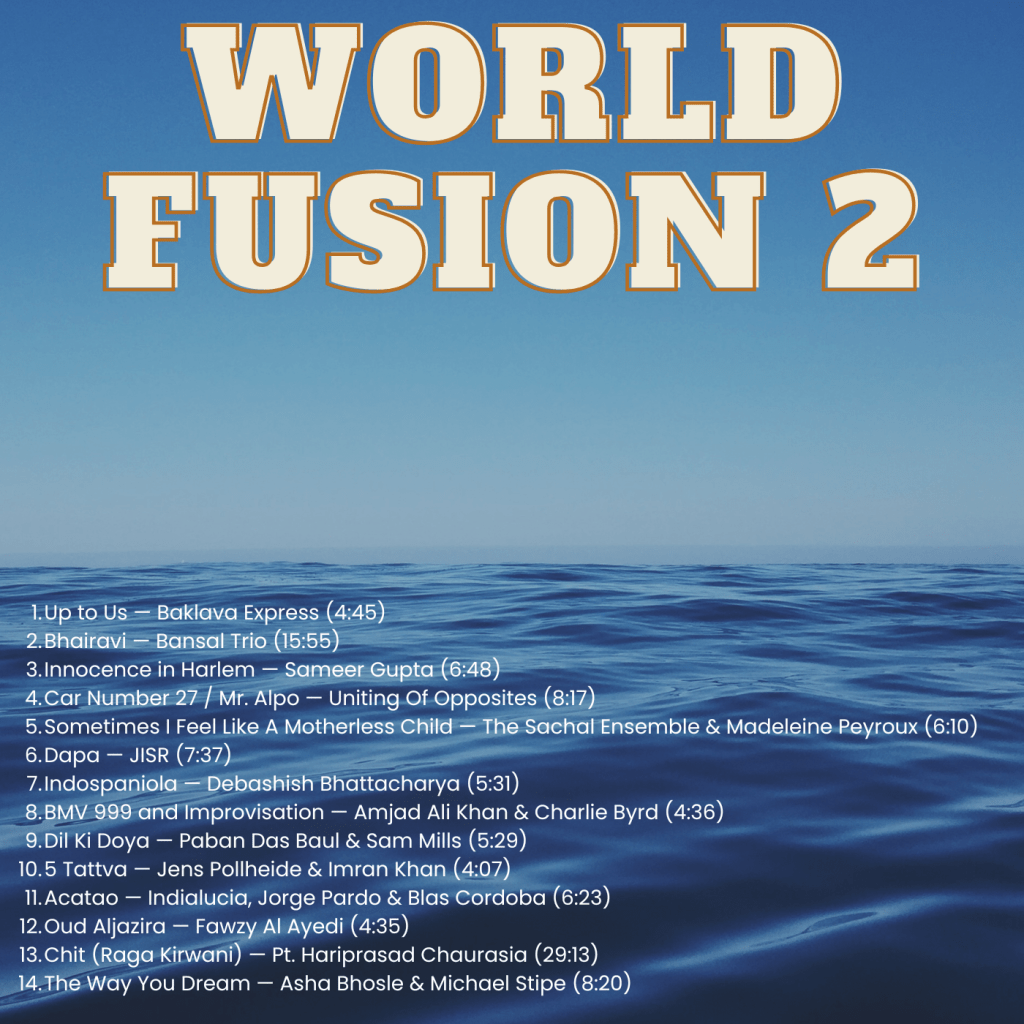
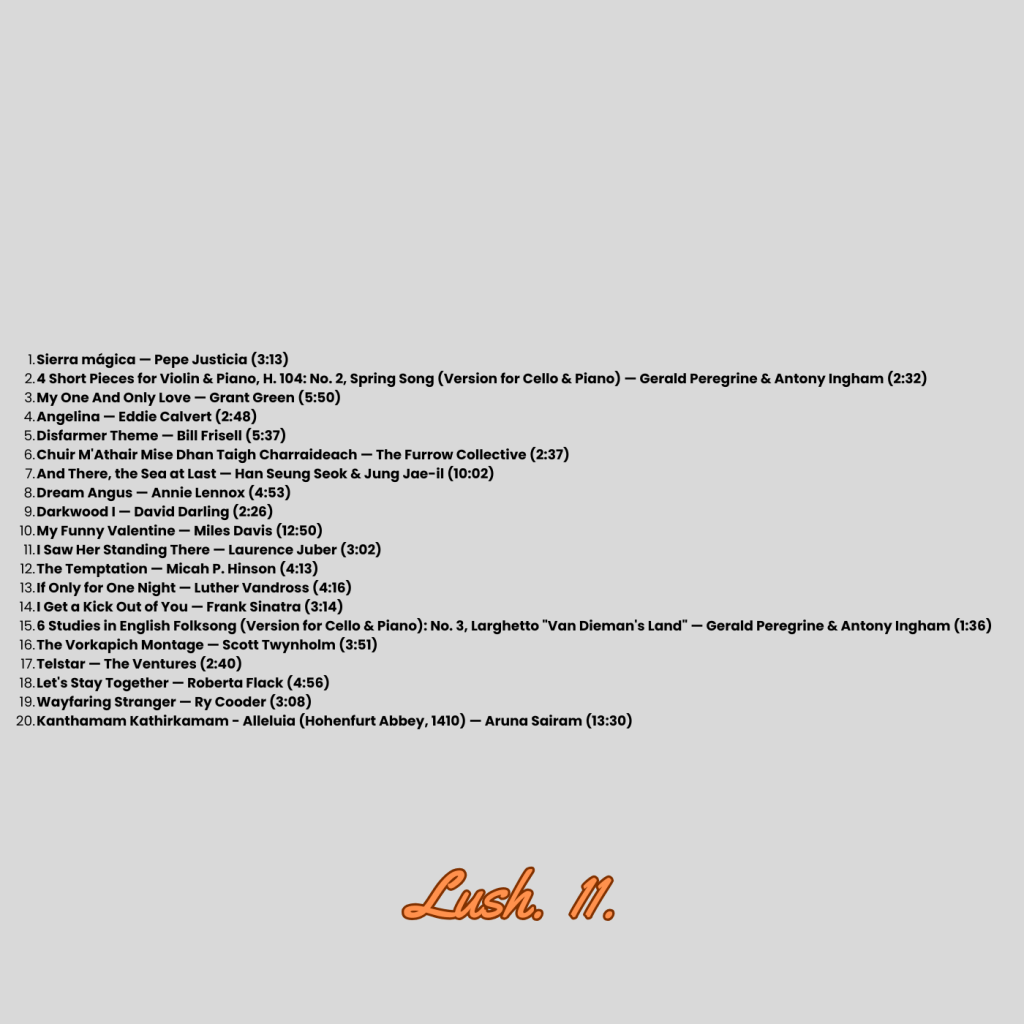
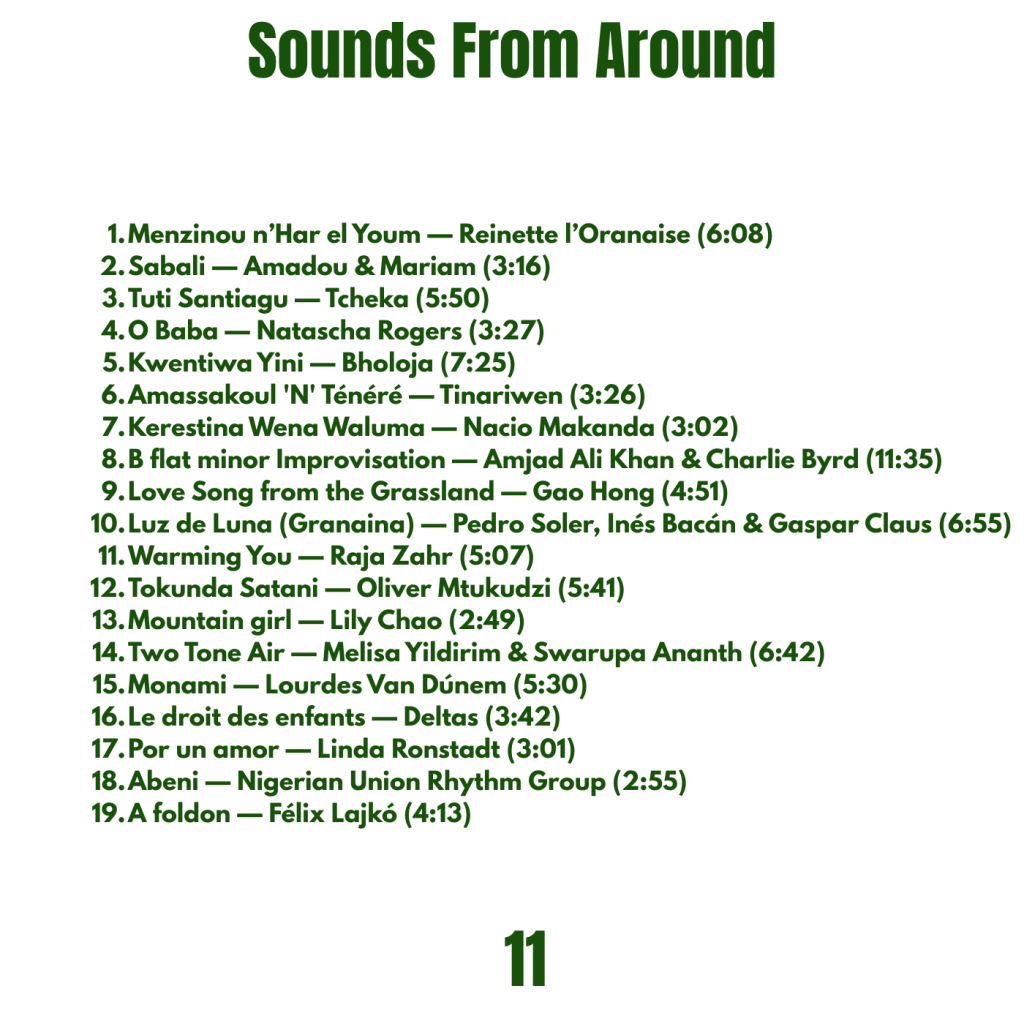
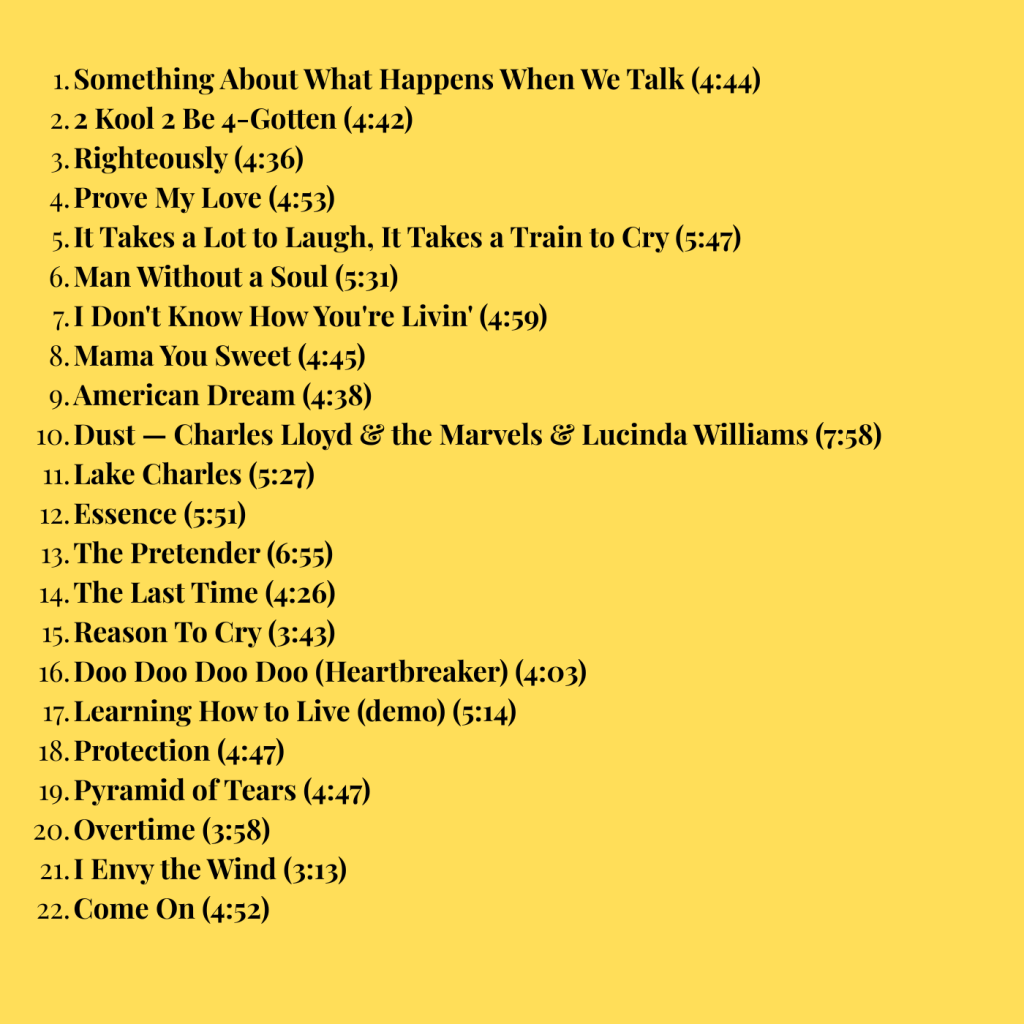
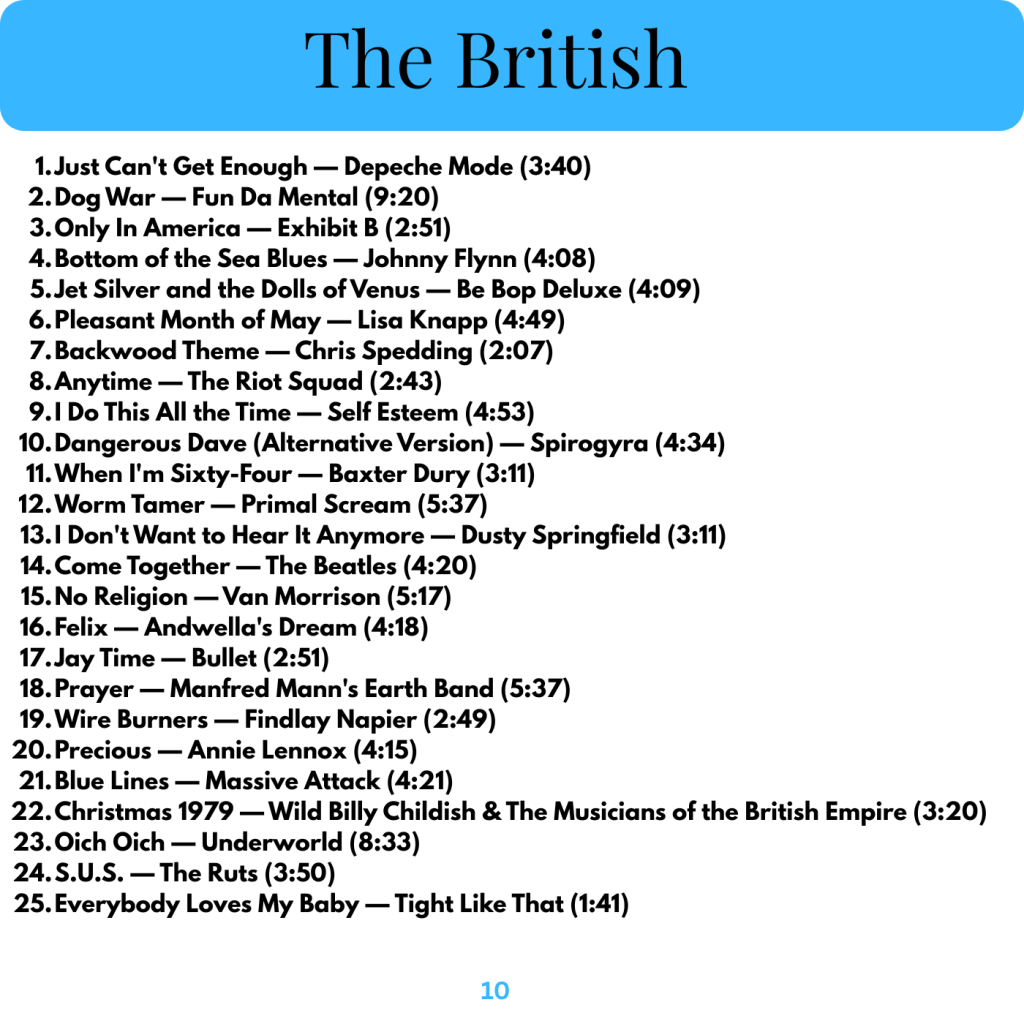
I may post a bit along the way but look forward to having your good wishes as I depart. As a small gift here is a mixtape of World Fusion which just so happens to be heavily colonised by South Asian sounds.









 Missionaries, Mercenaries and Misfits